
Farmers and Producers know, good milk quality depends on the correct cooling and system cleanliness.

Milk cooling has come a long way in the past few decades in Kenya. From the early days of spring water passing through a stack of 10-gallon milk cans, getting milk cold as quickly as possible once it leaves the cow has always been a priority at any dairy farm.
This is for two primary reasons: to inhibit bacteria growth, thereby extending shelf life; and to ensure the milk’s taste, enhancing salability.
Although optimal bacterial growth conditions vary for different organisms, milk is an ideal medium for the growth of many types of bacteria. Milk temperature plays an important role in this growth. Many bacteria types prefer to grow at body temperature of 30ºC to 37ºC, and other psychrotrophic bacteria thrive at cooler temperatures of 4ºC to 10ºC.
To ensure the best milk quality, the goal is to keep these bacteria from making contact with the milk by means of quality herd health procedures, properly tuning milking equipment, ensuring the cleanliness of all milk product surface equipment and employing hygienic operator procedures. The next key defense is cooling the milk from the cow as quickly as possible to a holding temperature of 2ºC to 3ºC, as this will significantly reduce the growth rate of any bacteria present.
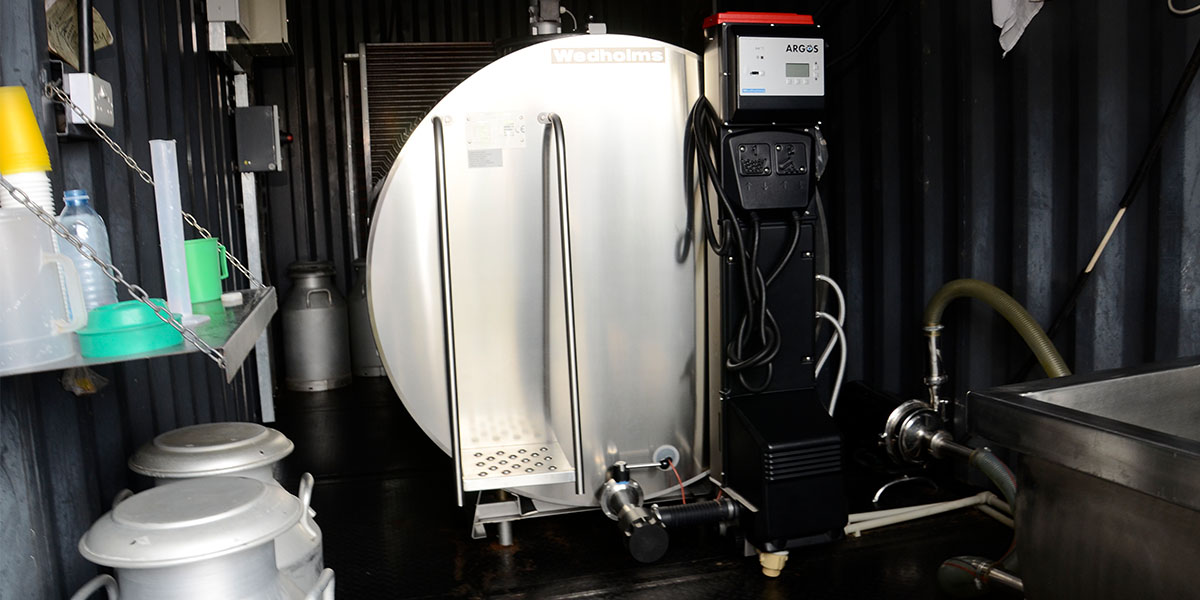
Milk cooler tanks have in the recent times became the option of choice across Kenya. These were prominently “open-top models” in capacities usually ranging from 250 to 5000 litres. The open top is preferred for two reasons: They are easier to dump milk into if you were to bring the milk to it in pails, and they are easier to wash with a manual brush. These coolers by tassmatt agencies limited are effective for cooling and particularly well matched for the milk delivery rates of milking systems.
As dairies grew in the late 1960s and 1970s, enclosed horizontal milk coolers became the normal offering. Sizes expanded, automatic wash was offered, and multiple evaporator plates allowed more cooling capacity to handle the higher milk flow rates that were becoming more commonplace. These tanks were able to be bulkheaded into existing milk rooms, which made them an attractive and cost-effective solution.
As dairies grew in the 1970s and 1980s, many started to apply “plate heat exchangers,” which allowed the cold well water used to water the cows to pass through the heat exchanger as a cooling medium to precool the milk from the cows before it entered the milk cooler. This remains a highly energy-efficient method to precool milk, improve overall long-term milk quality and reduce energy costs.
As years have passed, the enclosed horizontal milk cooler offerings have increased to sizes up through 30,000 litres. Many improvements in evaporator, refrigeration unit, wash system and control designs have improved efficiencies and provided many beneficial features.
Many dairies have grown and expanded to larger tank sizes and, in many instances, they use multiple tanks to allow multiple truckloads to be picked up at one time.
In-line cooling, often referred to as “instant cooling,” was developed in the late 1980s and applied to resolve these high milk flow rate cooling requirements. By using large-horsepower condensing units to cool a closed-circuit propylene-glycol solution, the capacity to cool large-volume milk flow became available. The chilled glycol solution was pumped through multiple sections of a high-flow plate heat exchanger.
As the milk was transferred from the milking parlour, it was first precooled with well water, then instant cooled immediately to the desired holding temperature as it passed through the chilled glycol heat transfer section. The instant cooling evolution was a great advancement toward the goal of cooling the milk to holding temperature as quickly as possible. Additionally, reaching cold milk holding temperature without constant milk cooler agitation provides milk quality advantages of reduced milk cell damage and elevated fatty-acids caused by extensive agitation and milk mishandling at warmer temperatures.

It should also be mentioned that instant cooling benefits for overall milk quality are not only associated with high-milk flow barns. Additionally, dairies appreciated having the milk instantly cooled to holding temperature before it entered the buffer tank and while the primary tank was being emptied and washed.
The ability to instant cool the milk also offered options such as pumping directly into transport trucks. This was seen as a significant advantage to large dairies, as often the capital cost of the truck was incurred by the hauler or milk receiver. Typically, the ongoing wash and maintenance costs were also passed on.
However, there were drawbacks with this type of system as well. First, the capacity of the cooling had to be sized to handle the peak milk flows rather than the average, as the milk was only passed through the plate heat exchanger once for a few seconds. Redundancy in condensing units was a must as well, for no opportunity to run at partial capacity was allowed. Additionally, in-line cooling, by its indirect nature (refrigerant to glycol to milk), could be approximately 20% less energy-efficient than traditional direct-expansion refrigeration in a milk cooler.
Scheduling trucks and drivers had their own headaches as well. The constant shuffling of trailers, evolving transportation laws and pushback from milk processors regarding load delivery times were often a hassle. This concern has only grown.
This trade-off has caused many to evaluate and decide to come back to on-farm storage with instant cooling. New advances in designs of vertical milk storage (silos) has included more capacity for direct-expansion cooling in these vessels, which can reduce the back-up redundancy that may be needed in the in-line cooling processes.
In some instances, peak milk flow loads can be handled by this extra cooling capacity now available on the newer silos. The capacity to hold a couple days of milk production provides significant insurance for truck failures, plant downtime, weather concerns, etc. Also, many expanding dairies recognize that a vertical silo installed on an exterior foundation and concrete slab can be much more cost-effective than incurring extensive construction costs to increase their milkhouse size and floor space to add more or larger horizontal milk coolers.
One of the most significant changes we see entering the marketplace today is in new control offerings for on-farm cooling and storage. Controls that can provide remote access to temperature and milk volume are now available. These have the option to send pickup alerts to the haulers, notifying them that the vessel is loaded to the proper level and at desired temperature.
They also provide the regulatory records for extended time and temperature recordings, eliminating the need for paper-and-ink recorders. Remote access is now available, allowing electronic milk volume level sensing; milk, wash and chiller glycol temperatures; refrigeration unit operating pressures and conditions; critical alarms; and historical data to be viewed in real time from any smartphone, tablet or computer with an internet connection.
It is safe to say that on-farm milk cooling, milk atm vending machine and milk pasteurizers has evolved over the past years, but as we look into the “future,” we can promise that it’s not over yet. end mark
TO BUY MILK COOLERS IN KENYA, CONTACT +254 726410068
CREDIT: Progessive Dairy
Mike Kelley is the Canadian Regional Sales Manager with Paul Mueller Company.