
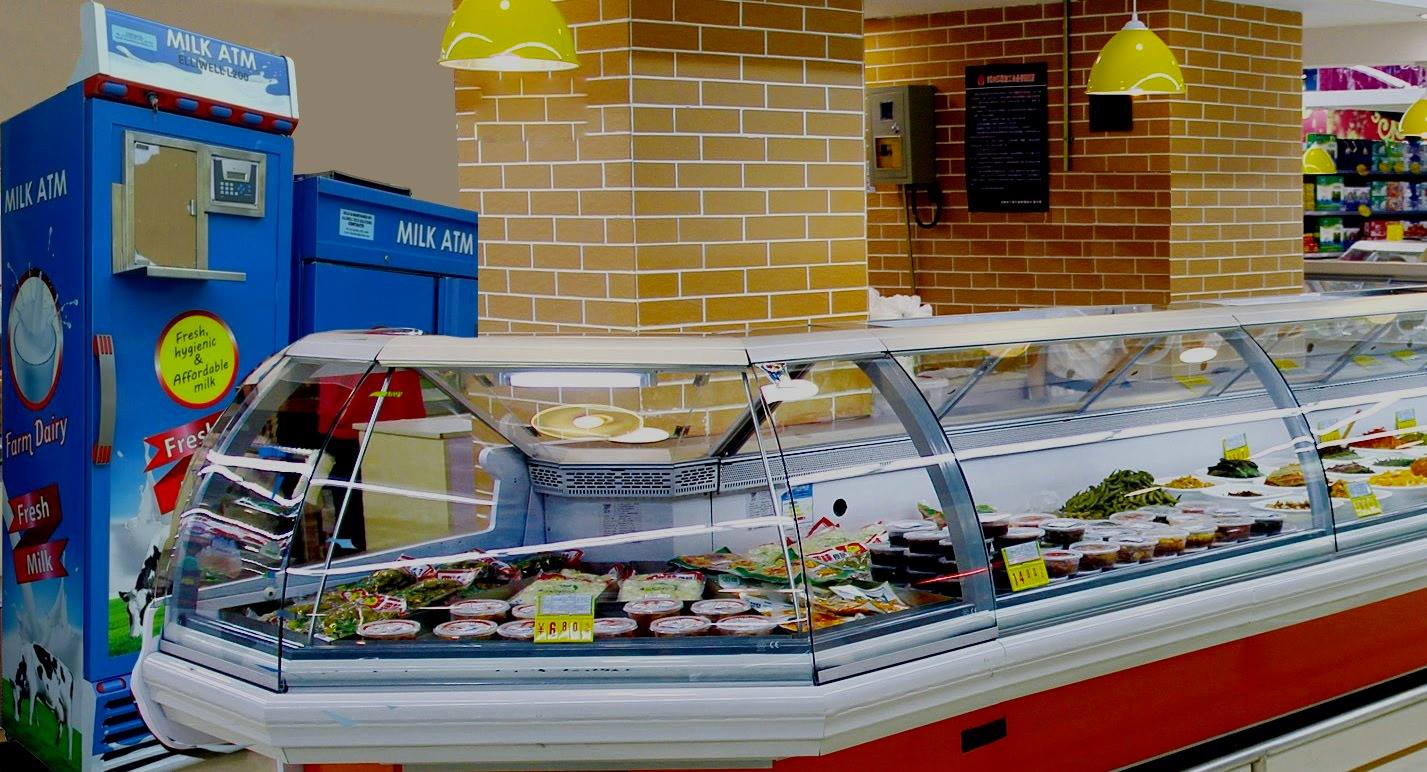
This study analyses trends in the development of ATM milk retailing in Kenya, based on data collected in six counties with high ATM density. Trends include growth in the ATM businesses and related support services, consumer perceptions and demand and milk quality and safety issues in this milk market segment. Building on the trends analysis, the second part of the study explores scenarios that are likely to affect further growth of milk ATMs. The evidence is intended to inform the necessary policy and regulatory framework that can support quality-driven investments in this growing retail market segment.

Urbanization, increasing population, rising income levels and changing dietary consumption patterns are expected to increase demand for milk and dairy products in Kenya. The annual per capita milk consumption of 110 litres is projected to double by the year 2030. Out of the 3.9 billion litres of cow milk consumed, 2.1 billion litres (54%) is marketed. It is estimated that about 70% of the marketed milk is traded informally, mostly in raw form, while the rest is processed into milk and dairy products and marketed formally. There has been a recent technological and market development in milk retailing in the formal milk market, called the milk-vending or dispensing machine (popularly known as the milk ATM). There has been a widespread uptake of this innovative platform for milk retail in some Kenyan urban and peri-urban areas.
The research questions were:
- What are the trends in the development of the ATM milk market segment?
- What are key consumer patterns, quality and food safety issues related to the development of milk ATM market segment?
- What businesses have emerged around ATM milk market segment?
- What are the potential scenarios that might affect the development of the ATM milk segment?
This study is based on primary data collected in the period between July and August 2019 from six counties with a high density of milk ATMs according to KDB database, using mixed methods. Survey questionnaires were administered on 162 ATM operators and 490 consumers (from which 352 were considered to be of acceptable quality and analysed). Key informant interviews were conducted for qualitative information with ATM machine suppliers, ATM milk processors, the Milk ATM Association, KDB officials and KDB inspectors. Further, secondary data was obtained from the KDB database and FAOSTAT and literature was reviewed to inform scenario development.
Major findings
Trends and development of ATMs over time
- About 74% of all ATMs are in Nairobi and its environs (including Kiambu, Machakos and Kajiado counties) but we note a trend of the business spreading to other counties.
- The ATM milk market is expanding and accounts for about 16% of the milk traded in what is characterised as the formal market.
- The current average consumer price per litre of raw milk is KES 54, ATM milk is KES 63 and processed packaged milk is KES 93 and ultra–heated milk (UHT) is KES 110; this means that packaged pasteurized and UHT milk on average are respectively 48% and 73% more expensive than ATM milk, while ATM milk is 18% more expensive than raw milk. This positions ATM milk as an emerging alternative to processed packaged milk contributing to expanding the formal market of the Kenya dairy industry.
Consumer preferences, perceptions and quality issues related to ATM milk
- From the sample consumers, about 70% had consumed ATM mind only 17% of the population had consumed raw milk. The consumption patterns varied by income categories. Those categorised as high income only purchased packaged and ATM milk, while those in low and middle income categories bought all milk types
- For consumers who currently buy ATM milk, the most (43%) notable reason for this purchase choice was the affordability of ATM milk.
- Consumer preferences of the ATM point of purchase are based on milk quality, the reliability of supply, favourable operation hours and cleanliness of the ATM premises.
- Consumer concerns – including adulteration with preservatives, water and foreign materials – limit their confidence in ATM milk.
- Presently, consumers trust the quality of milk from ATMs more than the quality of milk from informal retail outlets (plastic), which should inform strategies to help milk from ATMs outcompete milk from informal segment outlets in price and quality.
The ATM market segment and the business ecosystem
- The average volume of ATM milk bought is 1.06 litres per buyer per day.
- Almost all (99%) ATM operators sell pasteurized milk, and a majority of them (67%) have contractual arrangements with a milk supplier (mainly processors, mini–processors and farmer cooperatives). However, co–pasteurization business (where ATM operators source raw milk and engage the services of a milk pasteurizer, for a fee) is developing, and self–pasteurization (where ATM operators own pasteurizers to pasteurize their own milk) is emerging as an alternative model of supplying milk to the ATMs.
- Importation of fully assembled ATM machines is falling, and there is an emerging trend of local fabrication of ATM machines like Tassmatt Agencies Limited with importation of some components.
- • Imported ATM machines cost about KES 1.2 million, while locally fabricated machines cost between KES 120,000–700,000 according to Tassmatt, depending on specifications and level of compliance with food safety requirements. Besides the initial investment, ATM businesses incur other costs such as licensing, branding and maintenance.
- Future technology demands for ATM machines, include improving their efficiency and effectiveness, include use of food–grade materials, sales record memory, GSM messaging systems, calibration accuracy, full automation and sensors indicating when the ATMs are running low.
- It is estimated that there were 2030 ATMs in Kenya in 2019, creating direct employment along the chain (each ATM employs 1.65 employees, which means 3350 employees in total, of whom 41% are female), as well as indirect employment (transporters, servicing, branding, pasteurizing, etc.).
Future development and scenarios analysis for the milk ATM supply chain
- Based on trends since 2005, the ATM milk market segment is projected to grow threefold in 10 years, from the current 102 million litres to 343 million litres. The best–case scenario is that it will grow by a factor of 4.38; in the worst–case scenario, the factor is 2.13.
- In a best–case scenario, where compliance has grown to 79% in the tenth year, the quantity demanded and supplied would grow by a factor of 4.71 and 4.48 respectively. Higher demand and supply result from increased consumer preference for ATM milk. However, laxity in ensuring compliance by KDB would lead to mushrooming of non–compliant milk ATMs that would affect consumer confidence.
- It is projected that with the impending milk ban in trade of raw milk in urban areas, the milk ATM market segment will capture an extra 30% of urban milk consumers. The ban on trading raw milk in urban areas has the potential to grow the ATM milk segment by a factor of about 6.
- The biggest potential for future expansion of the ATM milk market segment is by expanding into the informal market segment. Recommendations
- GoK could fast–track policy and regulations to remove unsafe operators and improve consumer confidence in the ATM milk product in order to utilize its potential, mainly linked to its price competitiveness, to be a game changer in the process of formalization of the milk marketing sector.
- Consumer organizations and the public sector could sensitize consumers through various campaigns and public media in assuring them of the market prospects for ATM milk, if quality along the supply chain would improve.
- GoK could support KDB in strengthening its capacity in terms of enforcement officers, data management systems, ATM milk traceability systems and appropriate systems for registering and monitoring ATMs.
- With the investments already made by operators, the government regulations could facilitate the supply chain, including a phased approach to stop the use of non–food–grade materials, to safeguard the interest of the investors and move to regulated machines. On the supply side, key enablers for the supply chain are enhancing growth of co–pasteurizers and building stronger linkages between milk ATM machine operators
Download Full Report Here